
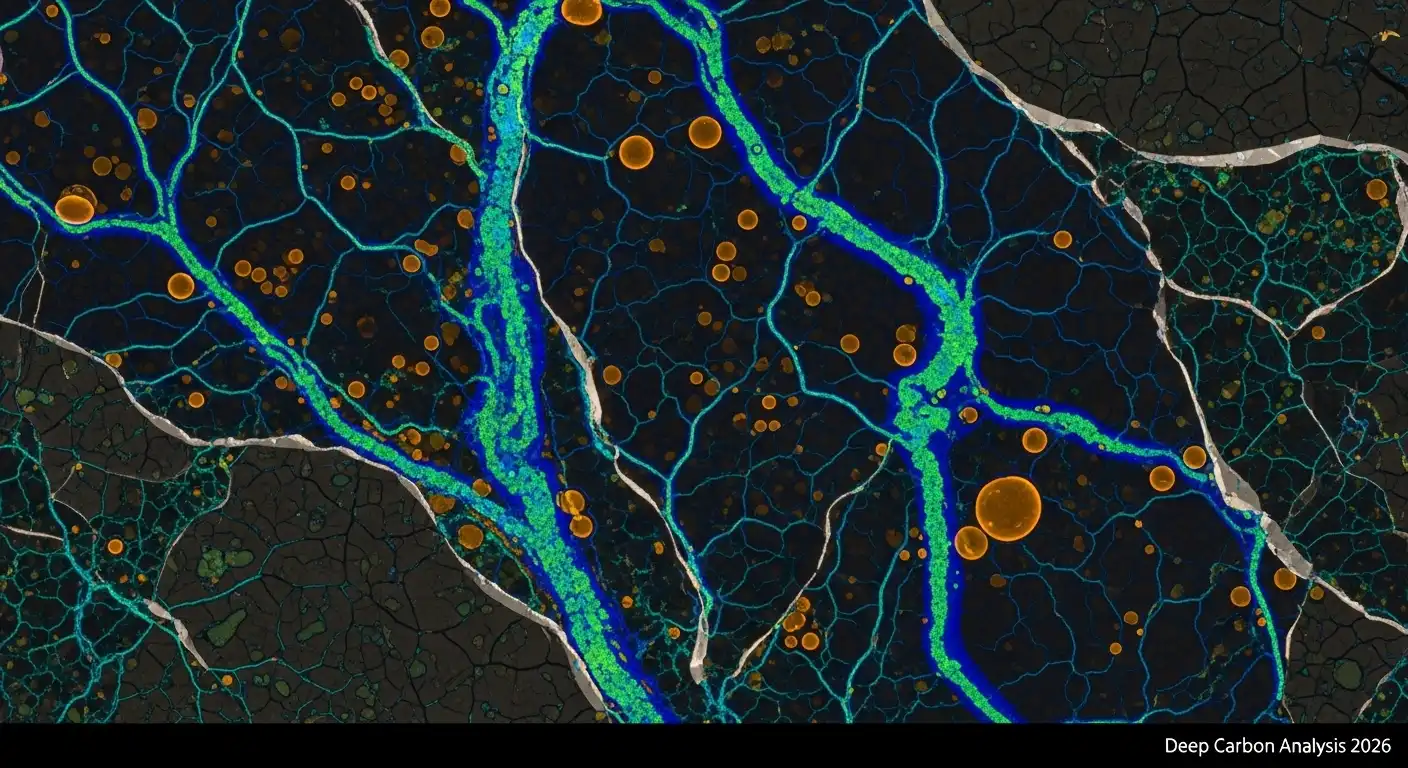
For decades, the prevailing scientific consensus was that most of the Earth’s methane originated from biological processes—either from ancient organic matter or modern microbes. However, as we move through 2026, the focus of the deep carbon cycle has shifted significantly toward the deep lithosphere. Recent deep-borehole data and geochemical modeling suggest that a vast, non-biological reservoir of carbon exists far below the crust.
This “Abiotic Methane” is not just a geological curiosity; it represents a fundamental component of the Earth’s total carbon budget and plays a critical role in our understanding of deep-earth geochemistry.
What is Abiotic Methane?
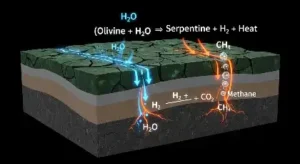 Abiotic methane (CH₄) is formed through chemical reactions that do not involve organic life. Unlike biogenic methane, which comes from the decomposition of once-living organisms, abiotic methane is the product of water-rock interactions at high temperatures and pressures. The primary driver of this process is a geochemical reaction known as serpentinization.
During serpentinization, ultramafic rocks (like olivine) from the Earth’s mantle react with water. This process releases hydrogen (H₂), which then reacts with carbon dioxide (CO₂) or other carbon-bearing minerals via the Sabatier reaction to produce methane. In 2026, researchers have identified new high-pressure catalysts within the Earth’s transition zone that may accelerate this process more than previously thought.
The Lithosphere as a Carbon Reservoir
The Earth’s lithosphere acts as a massive “carbon sink,” but it is also a dynamic processor. The movement of carbon from the mantle into the crust via abiotic methane production is a key flux that has been traditionally underestimated. Understanding this flux is essential for accurate global carbon modeling.
At Deep Carbon Cycle, we have previously explored the mechanics of carbon sequestration, but abiotic methane represents the opposite side of that coin—the natural release of deep-stored carbon into the upper systems of our planet.
Why 2026 is the Year of “Gold Hydrogen” and Methane
The interest in abiotic methane has skyrocketed this year because of its association with “Gold Hydrogen”—naturally occurring hydrogen deposits. Geologists have found that where abiotic methane is found, high-purity hydrogen often follows. This has turned a niche geochemical topic into a cornerstone of the 2026 energy transition discussion.
Key 2026 findings include:
- Isotopic Fingerprinting: New techniques allow scientists to distinguish between biogenic and abiotic methane with 99% accuracy by looking at the “clumped isotopes” of carbon and hydrogen.
- Deep Biosphere Interactions: Evidence suggests that deep-seated microbes may actually “feed” on abiotic methane, bridging the gap between the deep earth and the biological world.
- Subduction Zone Recycling: Carbonates subducted into the mantle are being converted back into methane and released through volcanic arcs more efficiently than 20th-century models predicted.
Implications for Carbon Sequestration and Climate Change
If the Earth is naturally producing significant quantities of methane abiotically, how does this affect our carbon sequestration efforts? It highlights the importance of “Deep Earth” stability. When we inject CO₂ for storage, we must ensure it does not interact with serpentinizing environments that could potentially convert it back into methane—a much more potent greenhouse gas.
This is a topic we discuss in detail in our analysis of 2026 geochemistry trends. The chemical “memory” of the rocks we use for storage is just as important as the storage capacity itself.
The Future of Deep Carbon Research
 As we look toward the 2030s, the goal is to map the “Deep Carbon Frontier.” By understanding how much abiotic methane is locked in the lithosphere, we can better predict the Earth’s long-term climate sensitivity. It also raises fascinating questions about the origins of life—not just on Earth, but on other planetary bodies like Mars or Enceladus, where serpentinization is known to occur.
For more on the building blocks of these processes, visit our guide on mineral carbonation and deep storage.
Conclusion: Redefining the Carbon Narrative
Abiotic methane reminds us that the Earth is a living chemical reactor. The deep carbon cycle is not a closed loop of human activity and surface biology; it is a profound, planet-wide system that stretches from the atmosphere down to the core-mantle boundary.