
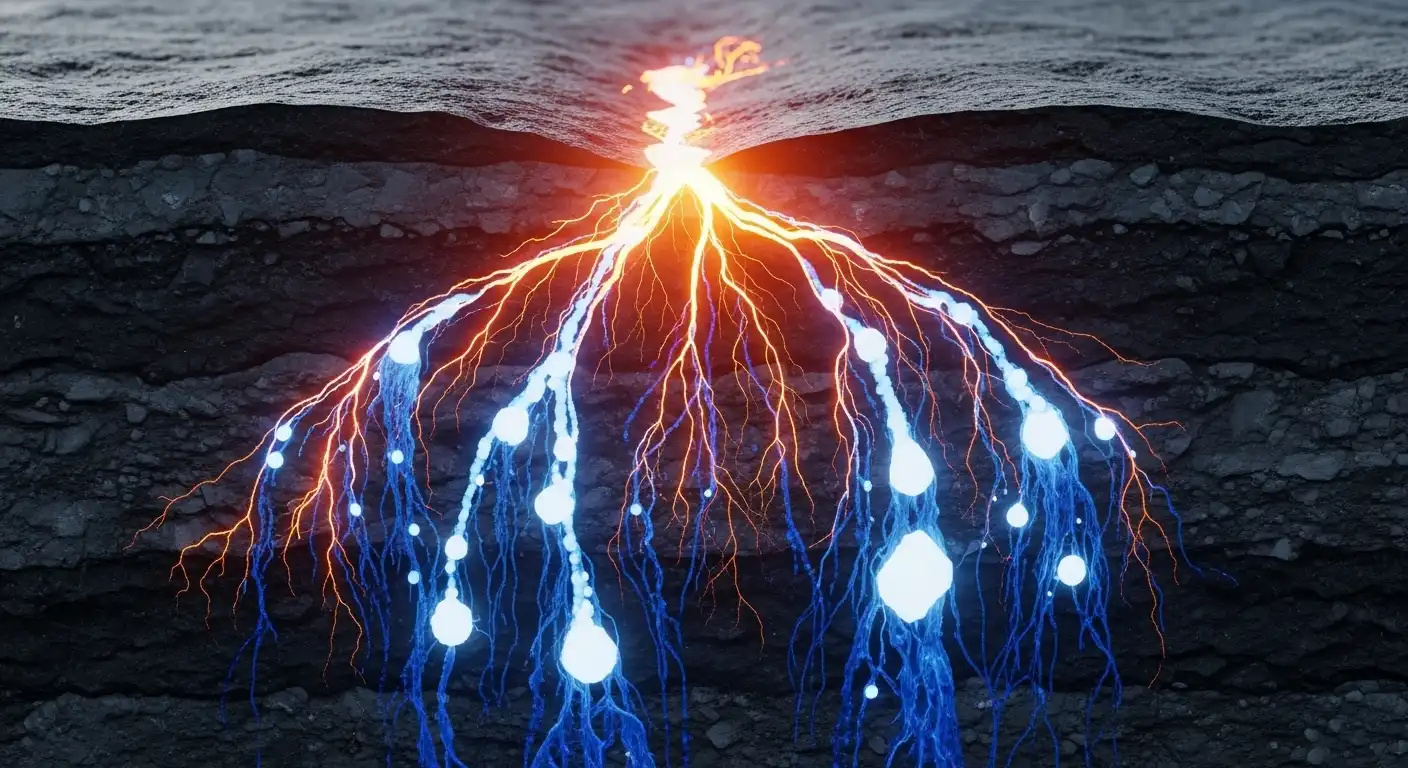
As the global community enters the second half of the 2020s, the conversation around climate change has shifted from theoretical mitigation to the urgent necessity of permanent carbon removal. While atmospheric capture technologies have seen rapid advancement, the question of where to safely store billions of tons of CO2 remains the ultimate geological challenge. In 2026, the scientific spotlight has turned toward the “Deep Carbon Engine”—specifically, the process of serpentinization-driven carbon mineralization.
This natural geochemical phenomenon, occurring in the Earth’s upper mantle and lower crust, represents one of the planet’s most potent mechanisms for regulating long-term habitability. By harnessing the spontaneous reaction between water, ultramafic rocks, and CO2, we are moving beyond temporary storage solutions toward a future of permanent, mineral-based sequestration. This article explores the intricate geochemistry of serpentinization and its role as a cornerstone of the global carbon cycle.
The Geochemistry of the Deep Earth: Defining Serpentinization
 Serpentinization is a hydration and metamorphic process that occurs when ultramafic rocks—primarily peridotite, which is rich in minerals like olivine and pyroxene—interact with water at high pressures and moderate temperatures (typically 200°C to 500°C). This reaction is most common at tectonic boundaries, mid-ocean ridges, and ophiolite complexes where mantle rocks have been thrust toward the surface.
The chemical reaction is exothermic, releasing significant thermal energy and hydrogen gas ($H_2$). The primary result is the transformation of dense, dark peridotite into the green, veined family of minerals known as serpentine. However, for the purpose of carbon sequestration, the most important byproduct of this reaction is the generation of highly alkaline, calcium- and magnesium-rich fluids.
Spontaneous Mineral Carbonation: Turning Gas into Stone
In the context of the Deep Carbon Cycle, serpentinization serves as the “primer” for a secondary reaction: mineral carbonation. When carbon dioxide, either naturally occurring in deep fluids or artificially injected, encounters the alkaline fluids produced by serpentinization, a spontaneous chemical bond is formed.
Through this process, CO2 reacts with the dissolved magnesium ($Mg^{2+}$) and calcium ($Ca^{2+}$) ions to precipitate solid carbonate minerals, such as magnesite ($MgCO_3$) and calcite ($CaCO_3$). Unlike traditional Carbon Capture and Storage (CCS), which relies on trapping gaseous CO2 in porous sedimentary rocks—where it remains under pressure and carries a risk of leakage—mineral carbonation effectively “locks” the carbon into a solid, stable mineral form that can last for millions of years.
Why 2026 is the Year of In-Situ Mineralization
Recent research milestones achieved in early 2026 have transitioned mineral carbonation from laboratory pilot programs to large-scale field applications. Two primary factors are driving this momentum: reaction-driven cracking and exothermic synergy.
1. Reaction-Driven Cracking
One of the historical hurdles to in-situ mineralization was the concern that as minerals formed, they would clog the pores of the rock, preventing further CO2 from reaching unreacted surfaces. However, 2026 field data from the Oman Ophiolite project has confirmed that the volume expansion caused by mineral formation actually creates internal stress, causing the rock to fracture from within. This “reaction-driven cracking” constantly exposes fresh ultramafic surfaces, allowing the “deep reactor” to continue indefinitely without human intervention.
2. The Exothermic Synergy
Because serpentinization produces heat, it creates a self-sustaining environment. The thermal energy released by the initial hydration of the rock accelerates the subsequent carbonation reactions. This synergy makes ultramafic reservoirs, such as those found in Hawaii, California, and the Balkan Peninsula, the most efficient “natural factories” for carbon disposal on Earth.
Mapping the Global Ultramafic Sinks
 To fully utilize serpentinization carbon mineralization, geoscientists are currently mapping “Ophiolites”—sections of the Earth’s oceanic crust and underlying upper mantle that have been uplifted and exposed on land. These formations are the primary targets for 2026 sequestration projects.
- The Oman Ophiolite: The world’s largest and best-exposed ophiolite, capable of sequestering billions of tons of CO2 annually.
- The Samail Ophiolite: A key site for international research into the deep geochemistry of peridotite-water interactions.
- Oceanic Ridge Systems: Vast tracts of the seafloor where serpentinization occurs naturally, representing a near-infinite, though harder to access, carbon sink.
Challenges and Ethical Considerations
While the potential is vast, the stimulation of deep-earth reactions is not without risk. The injection of large volumes of fluids into the crust can, in some cases, induce micro-seismicity (minor earthquakes). Furthermore, the high-pH fluids generated by serpentinization must be carefully managed to prevent contamination of local groundwater systems. The 2026 regulatory framework for “Deep Earth Engineering” emphasizes the need for rigorous real-time monitoring and transparent data sharing within the geoscientific community.
Conclusion: The Future of the Deep Carbon Cycle
The study of serpentinization reminds us that our planet is a living, breathing chemical system. The carbon that we have extracted from the crust in the form of fossil fuels is essentially being returned to the crust in the form of carbonate minerals. By aligning our climate strategies with the Earth’s natural cycles, we are not just fixing a problem; we are participating in the long-term geochemical evolution of our world.
As we move further into 2026, the integration of serpentinization-driven mineralization into the global carbon market is inevitable. It offers the only truly “permanent” solution, moving carbon from the volatile atmosphere into the immovable lithosphere. The Deep Carbon Cycle is no longer just a subject of academic inquiry—it is the foundation of our planet’s future stability.